English


 English
Vaccimel immunotherapy for high-risk melanoma represents an important milestone in the advancement of clinical research in Latin America. Right from the start, it's worth pointing out that this type of innovation reinforces not only regional scientific development, but also the importance of a structured supply chain, logistics and regulatory compliance to make new therapies in oncology viable.
In this context, the launch of Vaccimel is attracting the attention of the clinical, hospital and pharmaceutical sectors, above all because it shows how integration between science, industry and logistical operations is essential for transforming research into a real impact on health.
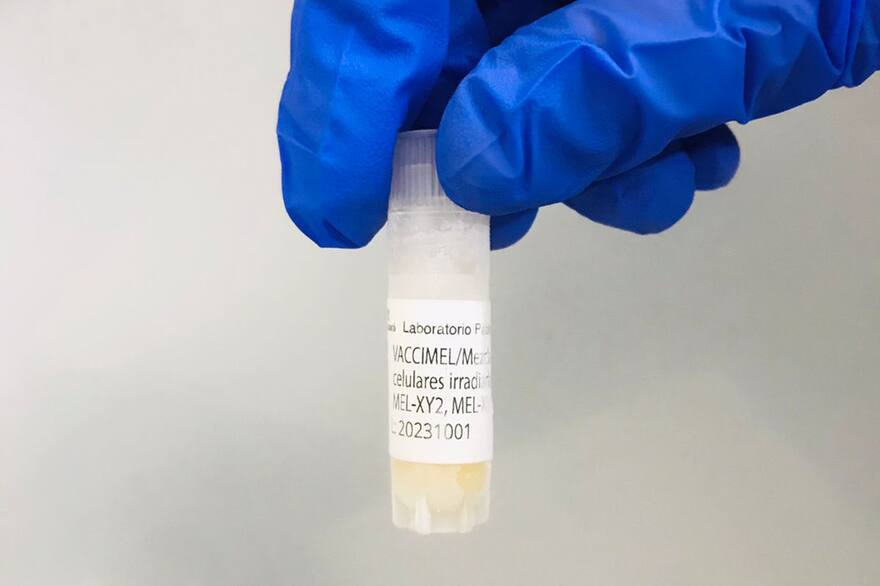
What is Vaccimel immunotherapy and what role does it play in the treatment of melanoma?
First of all, it's important to clarify that Vaccimel is not a preventive vaccine. On the contrary, it is a therapeutic immunotherapy, is indicated for patients with high-risk cutaneous melanoma who have already undergone surgery to remove the tumor.
In addition, its main objective is to stimulate the patient's own immune system, helping to reduce the chances of the disease recurring. In this way, Vaccimel is part of a global trend in oncology, which is increasingly relying on adjuvant and personalized treatments.
According to information published by leading press outlets, such as the newspaper La Nación, Following regulatory approval, immunotherapy has already begun to be applied in specialized centers in Argentina.
Clinical research and the advance of immunotherapies in Latin America
Latin America is currently becoming more and more important on the international clinical research scene. In this sense, initiatives such as Vaccimel immunotherapy demonstrate the region's scientific maturity and ability to develop solutions in line with global quality standards.
In addition, this movement strengthens the work of hospitals, CROs, bioequivalence centers and pharmaceutical companies, which are demanding increasingly rigorous and integrated processes. Consequently, the need for partners specialized in logistics and the supply of products for clinical research is also growing.
The role of pharmaceutical logistics in innovative therapies
However, the success of advanced therapies does not depend solely on scientific innovation. On the contrary, pharmaceutical logistics plays a central role in the entire healthcare value chain.
In order for immunotherapies such as Vaccimel to reach patients safely, it is essential to ensure that they do:
- strict temperature control
- complete product traceability
- compliance with regulatory requirements
- integration between manufacturers, clinical centers and distributors
In this way, logistics is no longer just operational but strategic, especially when it comes to sensitive, high value-added treatments.
Integrating innovation, supply and patient care
As new therapies are incorporated into the market, it becomes even clearer that innovation in health depends on a well-structured ecosystem. In other words, clinical research, production, storage and transportation need to act in coordination.
In this scenario, companies that offer integrated logistics solutions contribute directly to the continuity of treatment, patient safety and the efficiency of the health system as a whole. Therefore, keeping up with these advances is essential for organizations committed to excellence in the sector.
Immunotherapy and the strengthening of clinical cancer research in the region
The progress represented by Vaccimel immunotherapy for high-risk melanoma highlights the strengthening of clinical cancer research in Latin America. More than a scientific innovation, it is a concrete example of how collaboration between research, industry and logistics can have a positive impact on health.
In this way, initiatives like this reinforce the importance of integrated, reliable solutions that are aligned with regulatory requirements, ensuring that scientific progress translates into real benefits for patients and the entire healthcare ecosystem.